3 English and 3 math
Here are 6 random questions to try. Takers earning below 75% are unlikely to receive an offer. You have 1 minute 48 seconds per question on the real exam.
Question 1 of 6
2018 Test B English, question 16Passage Excerpt from A Voice in the Wilderness
Excerpt from A Voice in the Wilderness
by Grace Livingston Hill
With a lurch the train came to a dead stop and Margaret Earle, hastily gathering up her belongings, hurried down the aisle and got out into the night.
It occurred to her, as she swung her heavy suit-case down the rather long step to the ground, and then carefully swung herself after it, that it was strange that neither conductor, brakeman, nor porter had come to help her off the train, when all three had taken the trouble to tell her that hers was the next station; but she could hear voices up ahead. Perhaps something was the matter with the engine that detained them and they had forgotten her for the moment.
The ground was rough where she stood, and there seemed no sign of a platform. Did they not have platforms in this wild Western land, or was the train so long that her car had stopped before reaching it?
She strained her eyes into the darkness, and tried to make out things from the two or three specks of light that danced about like fireflies in the distance. She could dimly see moving figures away up near the engine, and each one evidently carried a lantern. The train was tremendously long. A sudden feeling of isolation took possession of her. Perhaps she ought not to have got out until some one came to help her. Perhaps the train had not pulled into the station yet and she ought to get back on it and wait. Yet if the train started before she found the conductor she might be carried on somewhere and he justly blame her for a fool.
There did not seem to be any building on that side of the track. It was probably on the other, but she was standing too near the cars to see over. She tried to move back to look, but the ground sloped and she slipped and fell in the cinders, bruising her knee and cutting her wrist.
In sudden panic she arose. She would get back into the train, no matter what the consequences. They had no right to put her out here, away off from the station, at night, in a strange country. If the train started before she could find the conductor she would tell him that he must back it up again and let her off. He certainly could not expect her to get out like this.
She lifted the heavy suit-case up the high step that was even farther from the ground than it had been when she came down, because her fall had loosened some of the earth and caused it to slide away from the track. Then, reaching to the rail of the step, she tried to pull herself up, but as she did so the engine gave a long snort and the whole train, as if it were in league against her, lurched forward crazily, shaking off her hold. She slipped to her knees again, the suit-case, toppled from the lower step, descending upon her, and together they slid and rolled down the short bank, while the train . . . ran giddily off into the night.
The horror of being deserted helped the girl to rise in spite of bruises and shock. She lifted imploring hands to the unresponsive cars as they hurried by her—one, two, three, with bright windows, each showing a passenger, comfortable and safe inside, unconscious of her need.
A moment of useless screaming, running, trying to attract some one’s attention, a sickening sense of terror and failure, and the last car slatted itself past with a mocking clatter, as if it enjoyed her discomfort.
Margaret stood dazed, reaching out helpless hands, then dropped them at her sides and gazed after the fast-retreating train, the light on its last car swinging tauntingly, blinking now and then with a leer in its eye, rapidly vanishing from her sight into the depth of the night.
She gasped and looked about her for the station that but a short moment before had been so real to her mind; and, lo! on this side and on that there was none!
The night was wide like a great floor shut in by a low, vast dome of curving blue set with the largest, most wonderful stars she had ever seen. Heavy shadows of purple-green, smoke-like, hovered over earth darker and more intense than the unfathomable blue of the night sky. It seemed like the secret nesting-place of mysteries wherein no human foot might dare intrude. It was incredible that such could be but common sage-brush, sand, and greasewood wrapped about with the beauty of the lonely night.
No building broke the inky outlines of the plain, nor friendly light streamed out to cheer her heart. Not even a tree was in sight, except on the far horizon, where a heavy line of deeper darkness might mean a forest. Nothing, absolutely nothing, in the blue, deep, starry dome above and the bluer darkness of the earth below save one sharp shaft ahead like a black mast throwing out a dark arm across the track.
As soon as she sighted it she picked up her baggage and made her painful way toward it, for her knees and wrist were bruised and her baggage was heavy.
A soft drip, drip greeted her as she drew nearer; something plashing down among the cinders by the track. Then she saw the tall column with its arm outstretched, and looming darker among the sage-brush the outlines of a water-tank. It was so she recognized the engine’s drinking-tank, and knew that she had mistaken a pause to water the engine for a regular stop at a station.
cinders: track bed made from the residue of burnt coal
From A VOICE IN THE WILDERNESS by Grace Livingston Hill—Public Domain
Question
In paragraph 2, how does the phrase “when all three had taken the trouble to tell her” affect the tone in the first part of the excerpt?
- AIt creates an accusatory tone by suggesting that Margaret believes that others are responsible for her problem.
- BIt introduces a defiant tone by suggesting that Margaret left the train early to prove a point.
- CIt suggests a frustrated tone by showing that Margaret feels confused by the inconsistent help offered by the railroad employees.
- DIt establishes an appreciative tone by showing that Margaret feels cared for by the railroad employees.
Show the answer
Correct answer: C
The question asks how the phrase affects the tone in the first part of the excerpt. The phrase includes the words “all three” and “taken the trouble,” emphasizing Margaret’s early frustration as she recalls with some confused irritation that the men thought she needed an abundance of help earlier, but none of them is around to help when the train stops, as indicated in Option C.
Option A is incorrect because when Margaret recalls the interaction, there is no indication that she blames the men for her current problem.
Option B is incorrect because, while the description of how Margaret “hastily [gathers] up her belongings” and “[hurries] down the aisle” (paragraph 1) gives the appearance of being defiant, there is no evidence that she intentionally put herself in this vulnerable position just to make a point.
Option D is incorrect because when Margaret recalls the interaction, there is no evidence that she appreciates the care shown to her, but rather she seems a bit offended that the men do not think she could take care of herself, as shown by the author’s description of the forceful way she exits the train without assistance when it stops.
Question analysis
This tone question looks at a phrase from the opening of Grace Livingston Hill’s novel A Voice in the Wilderness, as Margaret Earle steps off a train at night. Students decide what attitude the phrase about the three railroad men creates. The wording is low-key and old-fashioned, which makes the attitude behind it easy to misjudge.
- Grade level
- Grade 8 reading and task
- Compared with grade 7
- Above grade 7 Grade 7 tone questions usually rest on clearly charged words; this one hinges on an understated phrase in century-old prose. Students must read how Margaret feels about the trainmen from context, without help from any strongly worded clue.
- Estimated difficulty
- Hard: combines ideas, needs a plan, and has more than one tempting wrong answer.
- Thinking it demands
- Depth of knowledge 2, skills and concepts · mainly analyze
- What makes it hard
- A very close wrong answer major
- Complex sentences moderate
- Reading between the lines moderate
- Hard words minor
- Evidence
- Answered from one paragraph or stanza
- Reading level
- Passage: about grade 8, 981 words; question and choices: about grade 10, 96 words.
- Students, last 30 days
- Not enough answers yet to show (it takes 10).
Why it is hard, traps and wrong answers (shows the answer)
Why it is hard
The phrase is understated, and old-fashioned wording hides how Margaret feels. Students who sense criticism of the trainmen often push it too far into blame, which she does not reach until paragraph 6, while those who take “taken the trouble” at face value hear gratitude. The question rewards reading the whole sentence: “it was strange” and her quick excuse about engine trouble show puzzlement and mild irritation, not accusation.
A very close wrong answer major Choosing the answer
The accusatory choice and the frustrated choice both find a negative attitude toward the railroad employees; only the degree separates them, since Margaret calls their absence “strange” and excuses it rather than blaming them. (Embretson & Wetzel, 1987; Gorin & Embretson, 2006; Ascalon et al., 2007)
Complex sentences moderate Understanding the question
The phrase sits deep inside a 66-word sentence that opens with her swinging the suit-case down and closes with voices up ahead, so its contrast is easy to lose. (Abedi & Lord, 2001; Freedle & Kostin, 1993; Messick, 1989)
Reading between the lines moderate Working it out
Margaret never says she is annoyed; the feeling comes from the contrast between “all three had taken the trouble to tell her” and none of them coming to help. (Graesser, Singer & Trabasso, 1994; Kintsch, 1998)
Hard words minor Understanding the question
Each choice turns on a tone word, “accusatory,” “defiant,” “frustrated,” “appreciative,” and students unsure of these labels cannot match them to the scene. (Perfetti, 2007; Freedle & Kostin, 1993)
Strategy: Reread the full sentence the phrase sits in, ask how Margaret feels about the three men at this moment, and match both the feeling and its reason to a choice.
Traps
- Too broad or too strong: A choice overstates, generalizes, or uses absolute words the text does not support.
- Wrong tone or attitude: Misjudges the tone, attitude or point of view, such as reading admiration as criticism, or taking a character's or subject's feelings for the author's.
The wrong answers, classified
A Too broad or too strong (King et al., 2004)
Rightly hears criticism of the three trainmen but inflates puzzlement into blame; she even excuses them with possible engine trouble, and only in paragraph 6 thinks “They had no right.”
B Reads too much in (Graesser, Singer & Trabasso, 1994)
Builds a story of defiance from her hasty exit in paragraph 1, though nothing suggests she left the train early to prove anything to anyone.
D Wrong tone or attitude (Graesser, Singer & Trabasso, 1994)
Takes “taken the trouble” as gratitude for the men’s care, reading the phrase on its own and missing the sentence’s point that none of them came to help.
Working it out, step by step
Figure out what the question asks
This asks about tone: the feeling or attitude that the words give. What does one phrase show about how Margaret feels toward the train workers?
Read the whole sentence
In paragraph 2, Margaret thinks “it was strange that neither conductor, brakeman, nor porter had come to help her off the train, when all three had taken the trouble to tell her that hers was the next station.”
Work out the feeling
A conductor, a brakeman and a porter are train workers. To take the trouble means to make an effort. All three made an effort to tell her about her stop. But now none of them comes to help. That doesn’t add up, and she calls it “strange.” She feels puzzled and a bit annoyed. That is frustration.
She even makes excuses for them: “Perhaps something was the matter with the engine.” So she is not blaming them.
Check each choice
- A is wrong. “Accusatory” means blaming. Margaret makes excuses for the workers instead.
- B is wrong. “Defiant” means boldly refusing to obey. Nothing shows she left the train to prove a point.
- C is right. The workers were helpful at first and then vanished. She is confused and frustrated.
- D is wrong. “Appreciative” means thankful. The point is that nobody came to help.
Watch out: A is tempting because she does find the workers’ absence odd. But odd is not the same as their fault.
Choose the answer
The phrase shows Margaret puzzled by help that came and then disappeared. So the answer is C.
Why this answer and not the closest wrong one
A is the closest wrong answer, because both A and C find something negative in her thoughts. But A goes too far. Margaret does not blame the workers. She guesses they “had forgotten her for the moment.” She is puzzled, not accusing, as C says.
More questions like this
The original DOE question
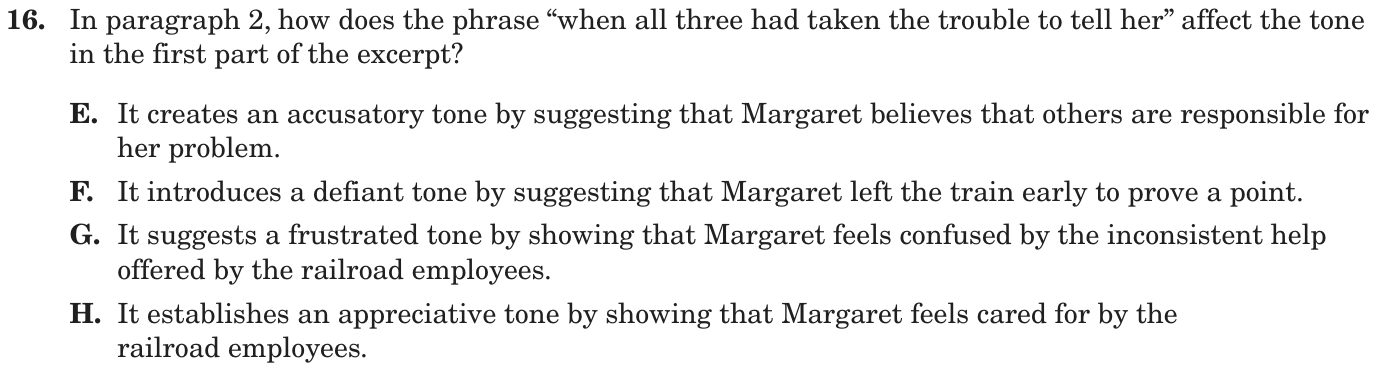
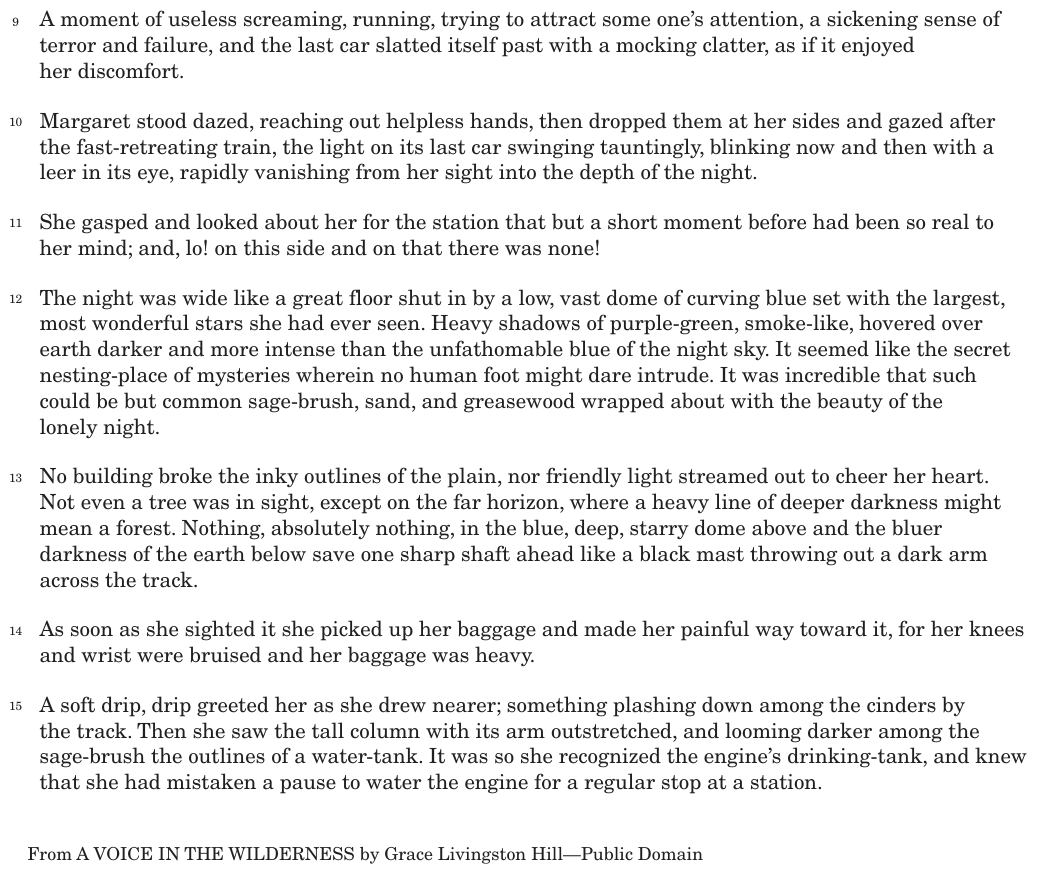
The passage “Excerpt from A Voice in the Wilderness” as printed (pages 128–129)
Question 2 of 6
2024 Test A English, question 24Passage At Dusk
At Dusk
by Natasha Trethewey
At first I think she is calling a child,
my neighbor, leaning through her doorway
at dusk, street lamps just starting to hum
the backdrop of evening. Then I hear
the high-pitched wheedling1 we send out
to animals who know only sound, not
the meanings of our words—here here—
nor how they sometimes fall short.
In another yard, beyond my neighbor’s
sight, the cat lifts her ears, turns first
toward the voice, then back
to the constellation of fireflies flickering
near her head. It’s as if she can’t decide
whether to leap over the low hedge,
the neat row of flowers, and bound
onto the porch, into the steady circle
of light, or stay where she is: luminous
possibility—all that would keep her
away from home—flitting before her.
I listen as my neighbor’s voice trails off.
She’s given up calling for now, left me
to imagine her inside the house waiting,
perhaps in a chair in front of the TV,
or walking around, doing small tasks;
left me to wonder that I too might lift
my voice, sure of someone out there,
send it over the lines stitching here
to there, certain the sounds I make
are enough to call someone home.
“At Dusk” from NATIVE GUARD by Natasha Trethewey, published by Houghton Mifflin Company. Copyright © 2006 by Natasha Trethewey. All rights reserved.
1wheedling: speaking in a flattering manner
Question
How does the setting affect the events of the poem?
- AIt enables the speaker to regularly overhear the neighbor calling for her cat at dusk.
- BIt allows the speaker to observe the neighbor quietly without interacting with her.
- CIt shows how living in close proximity helps the speaker feel connected to the neighbor.
- DIt shows how feeling isolated causes the speaker to imagine interactions with the neighbor.
Show the answer
Correct answer: B
The question asks how the setting affects the events discussed in the poem.
A. Incorrect. In line 2, the speaker refers to the woman calling for her cat as “my neighbor,” which clearly suggests that the speaker lives next door to the woman. However, although the two live next door to each other, line 1 suggests that perhaps the speaker does not regularly overhear the neighbor because the speaker initially thinks that the neighbor is “calling a child” and only later realizes the neighbor is calling to a cat. Although the setting places the speaker and the neighbor in close proximity, the poem does not indicate the frequency or regularity with which the speaker overhears the neighbor.
B. CORRECT. In the first four lines, the speaker observes the actions of the neighbor as the neighbor leans out to call for the cat at dusk. Despite the speaker’s observation of the neighbor, there is no indication that the neighbor notices the speaker. The reader can conclude that because of the time of day and the speaker being in the house next door, the speaker can observe the neighbor without being observed by her or having to interact with her.
C. Incorrect. The setting of the poem is a neighborhood at nightfall, as indicated by “at dusk” in line 3, the reference to “another yard” in line 9, and the flickering fireflies in line 12. However, while the speaker is close enough to the neighbor to overhear her calling to the cat, there is no indication that the speaker feels connected to the neighbor. Instead, the speaker expresses curiosity about the neighbor after the neighbor goes inside, and the speaker is “left . . . / to imagine her inside the house waiting” (lines 21–22). The fact the speaker initially thought that the neighbor was calling a child indicates that the speaker is not familiar with the neighbor and her habits, and there is no indication that the speaker feels connected to the neighbor.
D. Incorrect. In lines 22–24, the speaker imagines what the neighbor may be doing while the neighbor is waiting inside for the cat to return, but the speaker is imagining the neighbor’s solitary experience after the neighbor has momentarily “given up” on calling to the cat (line 21). The speaker does not imagine personally interacting with the neighbor but rather briefly imagines what the neighbor is doing at home while the cat is away.
Question analysis
This reading question asks how the setting of At Dusk, a neighborhood at nightfall where a woman leans from her doorway to call her cat, affects the events of the poem. Because so little happens, students must infer the setting's role from small details, and several choices sound reasonable without being supported by the poem.
- Grade level
- Grade 8 reading and task
- Compared with grade 7
- Above grade 7 Grade 7 students analyze how setting shapes events, usually in a story with a clear plot. This poem has almost no action, so the student must reason from a handful of details about place and time, which is harder than typical grade 7 work.
- Estimated difficulty
- Hard: combines ideas, needs a plan, and has more than one tempting wrong answer.
- Thinking it demands
- Depth of knowledge 3, strategic thinking · mainly analyze
- What makes it hard
- A very close wrong answer major
- Reading between the lines moderate
- Evidence
- Answered from the whole text
- Reading level
- Passage: 236 words (a poem; reading level not measured); question and choices: about grade 8, 67 words.
- Students, last 30 days
- Not enough answers yet to show (it takes 10).
Why it is hard, traps and wrong answers (shows the answer)
Why it is hard
Little happens in this poem, so the setting's role must be built from small details: a neighbor at her doorway at dusk, a cat in another yard, a speaker who hears and watches but never speaks. The strongest wrong answer is right about overhearing and wrong only in claiming it happens regularly, which the speaker's first mistaken guess argues against. The other choices supply a feeling of closeness or of isolation that the poem never states.
A very close wrong answer major Choosing the answer
The overhearing choice describes what the setting allows almost as well as the right one and fails on a single word, “regularly,” since the poem records one evening and the speaker first mistakes the call. (Embretson & Wetzel, 1987; Gorin & Embretson, 2006; Ascalon et al., 2007)
Reading between the lines moderate Working it out
The setting's effect is never stated; it has to be inferred from the speaker hearing and watching from nearby while the neighbor, “leaning through her doorway,” never seems to notice anyone. (Graesser, Singer & Trabasso, 1994; Kintsch, 1998)
Strategy: Picture the scene from the speaker's position, then check each choice word by word against the poem and reject any that claims something the poem never states.
Traps
- Too broad or too strong: A choice overstates, generalizes, or uses absolute words the text does not support.
- Reads too much in: A reasonable-sounding conclusion that goes further than the text allows.
- Twists what the text says: Uses the text's topic and ideas but changes what it says: who did it, how much, when, or why.
The wrong answers, classified
A Too broad or too strong (King et al., 2004)
Rightly sees that living next door lets the speaker overhear the call, but “regularly” is unsupported, and the first guess about a child suggests the call is unfamiliar.
C Reads too much in (Graesser, Singer & Trabasso, 1994)
Connects living close by with the poem's interest in connection and the speaker's “I too,” but the speaker never claims to feel close to the neighbor.
D Twists what the text says (King et al., 2004)
Notices the speaker picturing the neighbor indoors and calls it imagined interaction, but the speaker pictures her alone, waiting or doing small tasks, and never mentions feeling isolated.
Working it out, step by step
Figure out what the question asks
The setting is where and when a story or poem takes place. You need to see how the setting shapes what happens in the poem.
Picture the setting
It is “dusk” (line 3), the dim time just after sunset. The neighbor is “leaning through her doorway” (line 2). The cat is “In another yard” (line 9). The speaker is close enough to hear and watch it all. But the speaker never speaks to the neighbor. Nothing shows the neighbor notices the speaker.
Work out the effect
Living next door puts the speaker close by. In the fading light, the speaker can watch quietly. So the speaker sees the neighbor and the cat without joining in. The whole poem is what the speaker sees, hears and imagines from there.
Check each choice
- A is wrong. The word “regularly” is the problem. The poem shows one evening.
- B is right. The speaker watches from nearby and never talks with the neighbor.
- C is wrong. The speaker never says they feel close to the neighbor.
- D is wrong. The poem never says the speaker feels lonely. The speaker pictures the neighbor alone inside, not the two of them talking.
Watch out: A is almost right, since living nearby does let the speaker overhear. One word makes it wrong.
Choose the answer
The setting lets the speaker watch quietly from close by. So the answer is B.
Why this answer and not the closest wrong one
A is the closest wrong answer. Living next door does let the speaker hear the call. But nothing says it happens often. The poem tells about one evening. At first the speaker even thinks a child is being called. B fits what the poem shows: the speaker watches without ever talking to the neighbor.
More questions like this
The original DOE question

The passage “At Dusk” as printed (page 48)
Question 3 of 6
2025 Practice Test A English, question 9Passage Excerpt from “Scribe Like an Egyptian”
Excerpt from “Scribe Like an Egyptian”
by Hilary Wilson
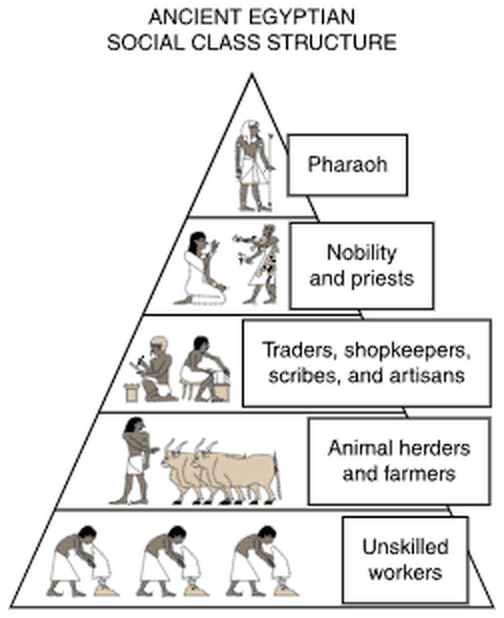
In ancient Egypt, literacy was the key to success. However, contrary to popular belief, not all Egyptian scribes understood hieroglyphs. Many relied instead on the simpler hieratic script for the multitude of everyday documents generated by the Egyptian bureaucracy.
Hieroglyphs—“the Words of God”—compose a writing system with more than 1,000 distinct characters, the meanings of which were lost for 1,500 years before they were deciphered by Jean-François Champollion in 1822. Including both ideograms (which convey a whole word or idea, either concrete or abstract, in a single sign) and phonograms (representing either an alphabetic sound or a group of consonants), [the writing system] was used in formal inscriptions on tomb and temple walls as well as on elaborate funerary papyri. For everyday purposes, however, scribes used a shorthand version of the hieroglyphic script known as hieratic, which was quicker to write and more economical of space. The two writings existed side by side for at least 2,500 years.
Scraps of ancient hieratic writing, mostly penned by student scribes on limestone flakes called ostraca, suggest that no matter how humble his origins, an educated Egyptian could achieve almost anything. Horemheb (d.1292 B.C.) is a good example. Born of middle-ranking parents, his scribal training led to an army career. From Scribe of Recruits, during the reign of Akhenaten (1353–1336 B.C.), Horemheb rose through the military ranks and, by the rule of Tutankhamun (1332–1323 B.C.), he was commander in chief of the Egyptian forces. As a close adviser of the young Pharaoh, Horemheb was appointed “Deputy of the King throughout the Two Lands,” and might have expected to succeed to the throne should the king die childless. He had to wait a few years, but eventually Horemheb achieved the pinnacle of his career by becoming the last king of the 18th Dynasty, making his mark by instituting dramatic reforms to the organisation of the army, the judiciary and administration in general. The lasting success of these changes owed much to his scribal background. . . .
But education was not available to all. Government departments and major temples supported schools, where boys commenced their training at six or seven, sometimes earlier. To these boarding establishments . . . family or household servants delivered the students’ food and drink rations daily for several years, during which time the student was not contributing to the family’s income. Boys from poorer families could only hope to be educated with support from a wealthier relative or patron, or through apprenticeship to an older scribe, perhaps the local clerk or land agent, who would teach them the basics of the scribe’s craft. This limited the scope for employment but such “on the job” training allowed apprentices to help out at home while learning. . . .
Scribal education began with the elementary principles of the hieratic script. The lowliest scribes, who trained for just five or six years, probably learned only the rudiments of the hieroglyphic script. Students were set exemplar documents and extracts from popular texts to copy, to practice their hieratic handwriting on basic-format letters, reports and contracts, while absorbing the good advice contained in the texts. Surviving examples of copy-work sometimes include tutors’ corrections added in red. Some significant Egyptian literary works survive almost exclusively from student copies.
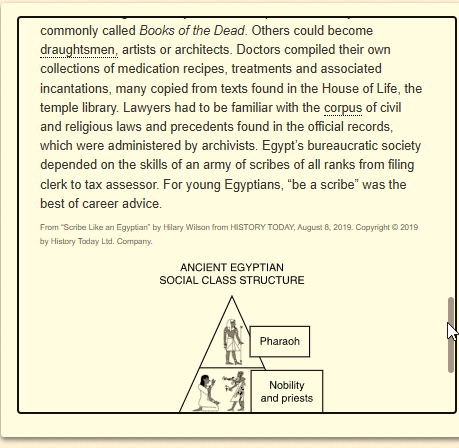
A schoolboy “dictionary” of hieroglyphs with their hieratic equivalents shows that a knowledge of more than 450 signs was required for everyday writing purposes. Lessons in record-keeping and filing and labelling enabled any half-competent scribe to perform that most essential of all scribal functions: the making and updating of lists. For professions such as those of government official, priest or lawyer, a scribe would train for several more years, increasing his vocabulary to perhaps a thousand or more signs. Those with the best handwriting or drawing skills might follow the craft of creating beautifully illustrated copies of funerary texts, commonly called Books of the Dead. Others could become draughtsmen, artists or architects. Doctors compiled their own collections of medication recipes, treatments and associated incantations, many copied from texts found in the House of Life, the temple library. Lawyers had to be familiar with the corpus of civil and religious laws and precedents found in the official records, which were administered by archivists. Egypt’s bureaucratic society depended on the skills of an army of scribes of all ranks from filing clerk to tax assessor. For young Egyptians, “be a scribe” was the best of career advice.
From “Scribe Like an Egyptian” by Hilary Wilson from HISTORY TODAY, August 8, 2019. Copyright © 2019 by History Today Ltd. Company.
bureaucracy: an administrative staff of government officials
funerary papyri: a sheet or scroll of papyrus containing religious images and hieroglyphs meant to help the deceased be reborn in the afterlife
rudiments: basics
schoolboy: slang that refers to materials used during the course of receiving an education
draughtsmen: people who draw plans of machinery or structures
corpus: a collection of writings
Question
Which sentence from the excerpt best supports the idea that there were different levels of education for a scribe?
- A“However, contrary to popular belief, not all Egyptian scribes understood hieroglyphs.” (paragraph 1)
- B“For everyday purposes, however, scribes used a shorthand version of the hieroglyphic script known as hieratic, which was quicker to write and more economical of space.” (paragraph 2)
- C“This limited the scope for employment but such ‘on the job’ training allowed apprentices to help out at home while learning.” (paragraph 4)
- D“For professions such as those of government official, priest or lawyer, a scribe would train for several more years, increasing his vocabulary to perhaps a thousand or more signs.” (paragraph 6)
Show the answer
Correct answer: D
The question asks for a sentence from the excerpt that best supports the idea that different levels of education were available to scribes.
A. Incorrect. The sentence from paragraph 1 provides evidence that Egyptian scribes used two different forms of writing, but it does not address the topic of education or the different levels of education that were available to scribes.
B. Incorrect. The advantages and purposes of hieratic script are described in this sentence from paragraph 2, but this explanation of the advantages and purposes does not suggest that there were different levels of education for scribes.
C. Incorrect. The fact that scribes could learn their trade through apprenticeships as discussed in this sentence from paragraph 4 does provide evidence that another method of learning to be a scribe was possible, but this process was for a limited entry into becoming a scribe, not the continued education scribes would need in order to work in specific areas.
D. CORRECT. By explaining that certain professions required additional years of training, this sentence from paragraph 6 supports the idea that different levels of education existed for scribes.
Question analysis
This evidence question on Hilary Wilson’s “Scribe Like an Egyptian,” a magazine article about how ancient Egyptian scribes learned their trade, asks which quoted sentence best supports the idea that scribes received different levels of education. The four sentences come from paragraphs 1, 2, 4 and 6, and more than one seems to touch on the idea, so close reading of each decides it.
- Grade level
- Grade 8 reading and task
- Compared with grade 7
- Above grade 7 Choosing the sentence that best supports an idea is routine grade 7 evidence work. Here several quotations touch on ways scribes differed, and the article’s dense, technical wording makes those differences harder to sort than usual.
- Estimated difficulty
- Hard: combines ideas, needs a plan, and has more than one tempting wrong answer.
- Thinking it demands
- Depth of knowledge 3, strategic thinking · mainly evaluate
- What makes it hard
- Reading between the lines moderate
- Every choice must be checked moderate
- Hard words minor
- Evidence
- Answered from several paragraphs or stanzas
- Reading level
- Passage: about grade 12, 810 words; question and choices: about grade 13, 110 words.
- Students, last 30 days
- Not enough answers yet to show (it takes 10).
Why it is hard, traps and wrong answers (shows the answer)
Why it is hard
Two of the wrong sentences are not off topic: one says not all scribes understood hieroglyphs, the other that apprenticeship narrowed a scribe’s job prospects, and both imply that scribes differed. The question rewards asking what the idea actually claims, that schooling itself came in stages, and only the sentence about professions that required more years of training says so outright. Students who stop at the first sentence suggesting a difference lose the point.
Reading between the lines moderate Working it out
The right sentence never says “levels”; students must see that training “for several more years” for official, priest or lawyer posts means a higher tier of schooling than the basic course. (Graesser, Singer & Trabasso, 1994; Kintsch, 1998)
Every choice must be checked moderate Choosing the answer
Two other quotations also hint at differences among scribes, paragraph 1’s “not all Egyptian scribes understood hieroglyphs” and paragraph 4’s “limited the scope for employment,” so each must be weighed, not just scanned. (Embretson & Wetzel, 1987)
Hard words minor Understanding the question
Terms such as “hieratic,” “economical of space” and “scope for employment” slow the reading of the quotations, and the shorthand sentence is hard to dismiss until hieratic is understood as a script. (Perfetti, 2007; Freedle & Kostin, 1993)
Strategy: Ask what a sentence would have to say to prove that scribal education came in levels, then test each quotation against that and prefer a direct statement over a hint.
Traps
- Supports only part of the claim: In a question about evidence: a line that backs one half of the claim but not the other, or a related point rather than the claim itself.
- True but not the answer: A choice says something accurate about the text that does not answer this question.
The wrong answers, classified
A Supports only part of the claim (King et al., 2004; Thissen, Steinberg & Fitzpatrick, 1989)
Reads “not all Egyptian scribes understood hieroglyphs” as proof of different levels of schooling, but it reports a difference in knowledge without saying anything about how scribes were taught.
B True but not the answer (King et al., 2004; Embretson & Wetzel, 1987)
Picks the sentence on hieratic as a faster everyday shorthand, which describes how scribes wrote, not how long or how far any of them studied.
C Supports only part of the claim (King et al., 2004; Thissen, Steinberg & Fitzpatrick, 1989)
Sees that on-the-job training “limited the scope for employment” and takes it for a lower level of education, though the sentence contrasts two routes into the trade, not stages of study.
Working it out, step by step
Figure out what the question asks
This asks for the sentence that best supports one idea: scribes could get “different levels of education.” A level is a stage. Some scribes studied for a short time, and others went on to study more. You need a sentence that shows a difference in schooling, not just any difference between scribes.
Find what each level looked like
Paragraphs 5 and 6 describe the training. Paragraph 5 says the lowest scribes studied for only five or six years. They learned just the basics of hieroglyphs. Paragraph 6 says that more than 450 signs were needed for everyday writing. Then choice D adds a higher level: “For professions such as those of government official, priest or lawyer, a scribe would train for several more years, increasing his vocabulary to perhaps a thousand or more signs.”
Work out what choice D means
A profession is a job that needs special training. Choice D says some jobs needed more years of study and more signs, perhaps over a thousand. A basic scribe stopped sooner and knew fewer signs. So schooling came in stages: a basic course, and then more years for the top jobs. That is what the question means by levels of education.
Check each choice
- A does not fit. It says not all scribes understood hieroglyphs. That is a difference in what scribes knew. It says nothing about how they were taught.
- B does not fit. It explains hieratic, a faster shorthand way of writing. That is about writing, not schooling.
- C does not fit. It is about apprentices, who learned on the job from an older scribe. That is a different way into the work, not a higher or lower stage of study.
- D fits. Some jobs needed several more years of training.
Watch out: A is tempting because it shows that scribes were not all alike. But it never mentions school.
Choose the answer
Only one sentence shows some scribes studying for years after the basic course. So the answer is D.
Why this answer and not the closest wrong one
A is the closest wrong choice. It shows that some scribes knew hieroglyphs and others did not. But it doesn’t say why, or how long anyone studied. D says plainly that some jobs needed several more years of training. That is a level of education above the basic one.
More questions like this
The original DOE question
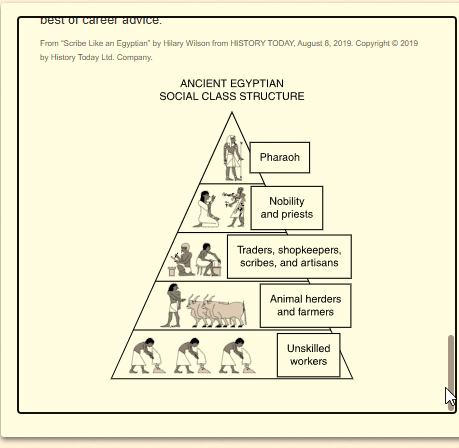
The passage “Excerpt from “Scribe Like an Egyptian”” as shown on the test
Question 4 of 6
2018 Test B Math, question 44Question
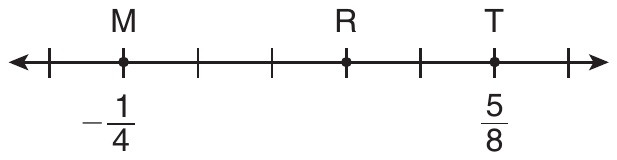
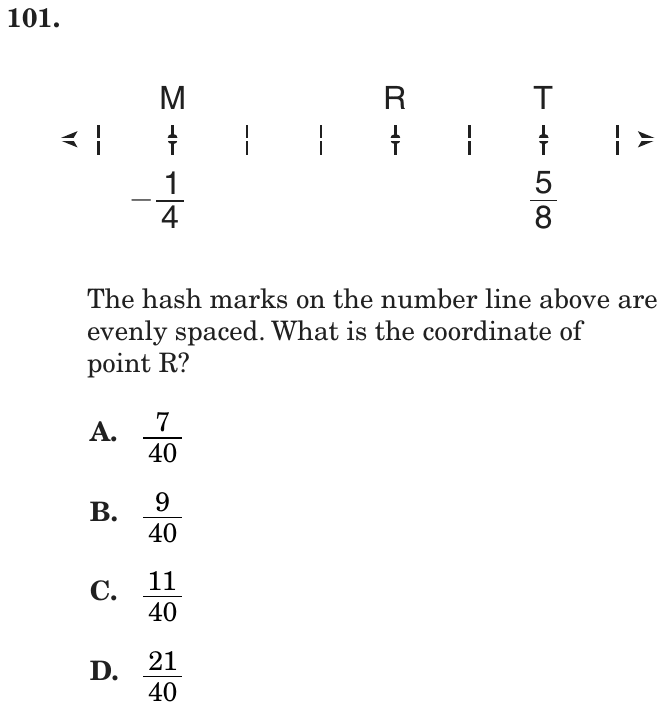
The hash marks on the number line above are evenly spaced. What is the coordinate of point ?
- A
- B
- C
- D
Show the answer
Correct answer: C
There are 5 sections between M and T. To find the length of one of these sections, find the distance between M and T and divide by 5:
R is 3 sections away from M, so add:
R is located at .
Question analysis
Students find the fraction at point R on a number line with evenly spaced hash marks, where M is at −1/4 and T is at 5/8. It tests fraction arithmetic with negative numbers. Working out the size of one gap and counting gaps from M to R takes several careful steps.
- NYS standards
- Grade level
- Grade 7 content, by NYS standard
- Compared with grade 7
- Above grade 7 Grade 7 students place fractions and negatives on number lines, but here they must subtract a negative fraction, divide by five, and then add back. Four fraction steps with unlike denominators make it harder than typical classwork.
- Estimated difficulty
- Hard: combines ideas, needs a plan, and has more than one tempting wrong answer.
- Thinking it demands
- Depth of knowledge 2, skills and concepts · mainly apply
- What makes it hard
- Error-prone arithmetic major
- Reading a figure, table or graph moderate
- Solution
- 4 steps
- Reading level
- Question and choices: about grade 6, 22 words.
- Students, last 30 days
- Not enough answers yet to show (it takes 10).
Why it is hard, traps and wrong answers (shows the answer)
Why it is hard
Fractions, a negative starting point and a count of spaces all have to come out right together. Students lose points by counting tick marks instead of spaces, by subtracting −1/4 as if it were positive, or by measuring R from 0 instead of from M. Converting both labels to fortieths first, −10/40 and 25/40, makes each gap a whole number of fortieths.
Error-prone arithmetic major Working it out
The gap length needs 5/8 − (−1/4) = 7/8, then 7/8 ÷ 5 = 7/40, then −10/40 + 21/40: negatives and three different denominators meet in one problem. (Brown & Burton, 1978; Junker & Sijtsma, 2001)
Reading a figure, table or graph moderate Understanding the question
The hash marks have to be counted as spaces: five from M to T, with R three spaces past M, while the unlabeled marks outside M and T play no part. (Lesh, Post & Behr, 1987; Kirsch & Mosenthal, 1990)
Strategy: Find the distance from M to T by subtracting their coordinates, divide it by the number of equal gaps, then step from M toward T by the right number of gaps.
Traps
- Stops one step early: A choice is a number from partway through the solution.
- Negatives and direction: Arithmetic with negative numbers, the order of a subtraction, or direction on a number line. (Moving a term across the equals sign without changing its sign is a faulty procedure.)
The wrong answers, classified
A Stops one step early (King et al., 2004; Gierl et al., 2017)
Finds the length of one gap, 7/8 ÷ 5 = 7/40, and gives it as R's coordinate without stepping from M.
B Negatives and direction (Brown & Burton, 1978)
Subtracts as 5/8 − 1/4 = 3/8 instead of adding, gets gaps of 3/40, and counts three gaps from 0.
D Stops one step early (King et al., 2004; Gierl et al., 2017)
Multiplies the 7/40 gap by 3 to get the distance from M to R, then forgets to add it to M's −1/4.
Worked solution, step by step
Formulas used
- Distance on a number line
- The right number is the point farther to the right on the number line. The left number is the other point. Subtracting tells how many units apart they are. Taking the left from the right keeps the answer positive.
- Dividing a fraction by a whole number
- a over b is the fraction, and c is the whole number you divide by. Splitting a fraction into c equal parts makes each part c times smaller. So you multiply the bottom number, b, by c.
Read the number line
M is at and T is at . The hash marks are evenly spaced, so every space is the same length. Count the spaces. From M to T there are 5 spaces. From M to R there are 3 spaces. You need the number at point R.
Find the distance from M to T
Use the distance formula. First write in eighths, as .
Taking away a negative is the same as adding. M and T are apart.
Find the length of one space
The 5 spaces are equal, so divide by 5.
Each space is long.
Watch out: this is the length of one space, not where R is. Stopping here gives choice A.
Step from M to R
R is 3 spaces to the right of M.
Now add that to M. Write as .
Watch out: is how far R is from M, not where R is. Choosing it gives choice D.
Give the answer
Point R is at , a little to the right of 0. So the answer is C, .
Check your answer
Go backward from T instead. T is 2 spaces past R, and . So R is at . Both ways give the same point.
More questions like this
The original DOE question
Question 5 of 6
2024 Test B Math, question 17Question
A bowl contains 12 green candies, 4 yellow candies, and some red candies. The probability of choosing a green candy at random is twice as great as the probability of choosing a red candy at random. What is the probability of choosing a yellow candy at random?
- A
- B
- C
- D
Show the answer
Correct answer: A
The probability of choosing a green candy is twice as great as the probability of choosing a red candy. There are 12 green candies. Let r = the number of red candies.
So there are 6 red candies. 12 green candies + 4 yellow candies + 6 red candies = 22 total candies.
There are 4 yellow candies out of a total of 22 candies. So the probability of choosing a yellow candy is
.
Question analysis
A probability question about a bowl of 12 green candies, 4 yellow candies and an unknown number of red ones. A green candy is twice as likely to be picked as a red one, and students find the chance of picking a yellow candy. The missing red count has to be worked out before any probability can be found.
- Grade level
- Grade 6 content, by NYS standard
- Compared with grade 7
- Above grade 7 Simple probability is grade 6 content in New York, and grade 7 problems usually give every count. Working backward from a comparison of two probabilities to a missing count, then forward to a third probability, is more than typical grade 7 work.
- Estimated difficulty
- Hard: combines ideas, needs a plan, and has more than one tempting wrong answer.
- Thinking it demands
- Depth of knowledge 2, skills and concepts · mainly apply
- What makes it hard
- Turning words into math moderate
- Combines ideas moderate
- Solution
- 3 steps
- Reading level
- Question and choices: about grade 7, 49 words.
- Students, last 30 days
- Not enough answers yet to show (it takes 10).
Why it is hard, traps and wrong answers (shows the answer)
Why it is hard
The question withholds the red count, and everything depends on recovering it from the comparison of probabilities. Students who cannot make that step tend to leave red out altogether, while those who find 6 red candies can still slip at the end by using the wrong total or the wrong color. Writing all three counts and the total of 22 before forming any fraction prevents both endings.
Turning words into math moderate Understanding the question
“Twice as great as the probability of choosing a red candy” must become 12 = 2 × the red count, which works only because both probabilities share one total. (Hegarty, Mayer & Monk, 1995; Koedinger & Nathan, 2004)
Combines ideas moderate Working it out
An unknown count has to be found from a ratio before any probability can be written, joining proportional reasoning with probability as a part over the total. (Embretson, 1998; Daniel & Embretson, 2010)
Strategy: Turn twice as likely into a statement about numbers of candies to find the red count, add all three colors for the total, then put the yellow count over that total and simplify.
Traps
- Answers a different question: A choice is right for another quantity: the other unknown, the rest instead of the part, the part instead of the whole.
- Numbers taken from the question: Combines the numbers in the question without a model of the situation, or is simply a number that appears in the question.
The wrong answers, classified
B Misunderstands the concept (Smith, diSessa & Roschelle, 1993; De Bock et al., 1998; Ni & Zhou, 2005)
Finds the 6 red candies but compares the 4 yellow with the 18 green and red ones, 4/18, a part-to-part ratio instead of part to whole.
C Numbers taken from the question (Hegarty, Mayer & Monk, 1995)
Leaves out the red candies, whose number is not given, and divides the 4 yellow by the 16 green and yellow candies.
D Answers a different question (King et al., 2004; Hegarty, Mayer & Monk, 1995)
Finds the 6 red candies and the total of 22 correctly but gives the chance of red, 6/22 = 3/11, instead of yellow.
Worked solution, step by step
Formulas used
- Probability
- P is the probability, the chance that something happens. The top is how many candies are the kind you want. The bottom is how many candies there are in all. Each candy is just as likely to be picked, so this fraction gives the chance.
Sort out what you know
The bowl has 12 green candies, 4 yellow candies and some red candies. You are not told how many are red. Let r be the number of red candies.
The chance of picking green is twice the chance of picking red. You need the probability (the chance) of picking yellow.
Compare green and red
Write each chance with the probability formula.
Green and red have the same bottom number, the total number of candies. So if the chance of green is twice the chance of red, there are twice as many green candies as red ones.
Find the red candies and the total
There are 6 red candies. Now add up all the candies.
There are 22 candies in all. Watch out: do not leave out the red candies just because their number was not given. Using 16 as the total gives 1/4, choice C.
Find the chance of yellow
There are 4 yellow candies out of 22.
Divide the top and the bottom by 2 to simplify. Watch out: the question asks for yellow, not red. 6/22 = 3/11 is the chance of red, choice D. The bottom must be all 22 candies. Using 18 gives 2/9, choice B.
So the answer is A, .
Check your answer
Check the clue. The chance of green is , and the chance of red is . Twelve is twice 6, so green is twice as likely. Also, the three chances add up to 1: .
More questions like this
The original DOE question
Question 6 of 6
2026 Practice Test C Math, question 10Question
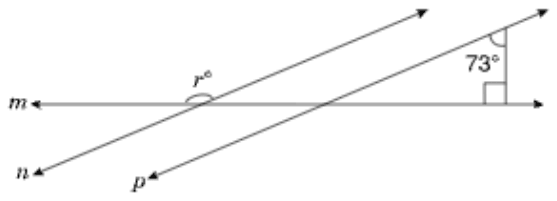
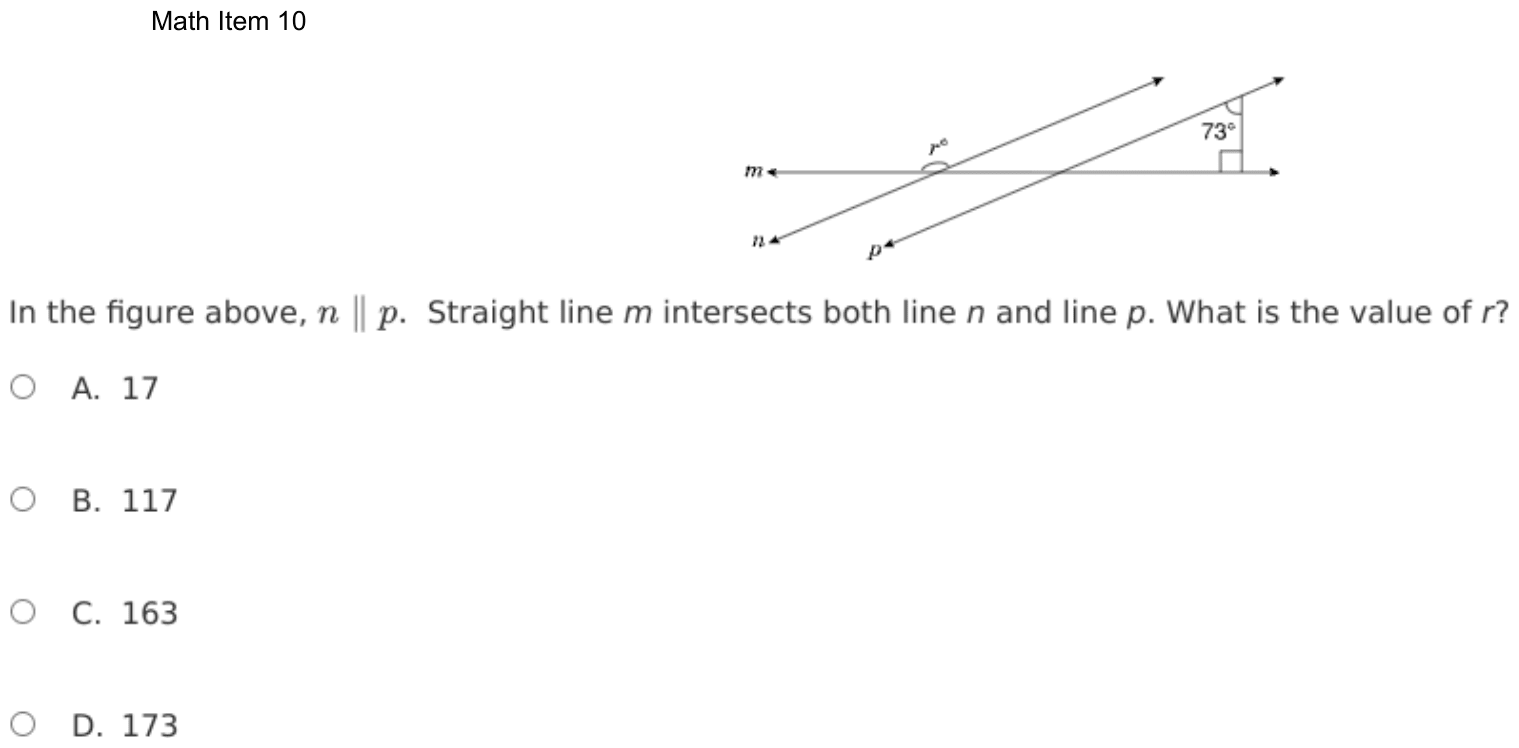
In the figure above, . Straight line m intersects both line n and line p. What is the value of r?
- A17
- B117
- C163
- D173
Show the answer
Correct answer: C
The triangle formed by line p, line m, and the line segment connecting the two contains a 73° angle, a right angle (90°), and a missing angle measuring x°. The sum of the interior angles of a triangle is 180°, so begin by finding the value of x:
Line m is a straight line, so it has a measure of 180°. The 17° angle from the triangle and the adjacent angle outside the triangle are supplementary, so they have a sum of 180°. Let s represent the measure of the adjacent angle outside the triangle. The value of s can be determined by subtracting:
Given that n and p are parallel lines and that they have been cut by a transversal, line m, then corresponding angles are congruent. Angles r and s are corresponding angles, so the value of r is congruent to the value of s, which is 163°.
Question analysis
Two parallel lines, n and p, cross a straight line m, and a segment drawn at a right angle to m forms a small triangle with lines m and p, where a 73° angle is marked. Students find the angle r at line n. It combines a triangle's angle sum, a straight angle and parallel lines, and the angle wanted sits away from the marked ones.
- NYS standards
- Grade level
- Grade 8 content, by NYS standard
- Compared with grade 7
- Above grade 7 Grade 7 angle problems use supplementary, vertical and adjacent angles. This one also needs the angle sum of a triangle and the angles formed by parallel lines and a transversal, grade 8 facts, chained across a busy figure.
- Estimated difficulty
- Hard: combines ideas, needs a plan, and has more than one tempting wrong answer.
- Thinking it demands
- Depth of knowledge 2, skills and concepts · mainly apply
- What makes it hard
- Reading a figure, table or graph moderate
- Combines ideas moderate
- Something you must already know minor
- Solution
- 3 steps
- Reading level
- Question and choices: about grade 3, 21 words.
- Students, last 30 days
- Not enough answers yet to show (it takes 10).
Why it is hard, traps and wrong answers (shows the answer)
Why it is hard
Each fact needs only a subtraction, but the student has to plan a route from the 73° angle at line p over to r at line n. The first number the route gives, the triangle's 17° angle, is listed, and it is the acute partner of r rather than r itself. The figure helps here: r is drawn plainly obtuse, and 163 is also 90 + 73, the triangle's exterior angle, which confirms it.
Reading a figure, table or graph moderate Understanding the question
The 73° sits between line p and the vertical segment, not between p and m, and r is the obtuse angle above m on the left of line n, far from every marked angle. (Lesh, Post & Behr, 1987; Kirsch & Mosenthal, 1990)
Combines ideas moderate Working it out
Three facts chain together: the triangle's angles sum to 180°, the angles along straight line m sum to 180°, and corresponding angles at the parallel lines n and p are equal. (Embretson, 1998; Daniel & Embretson, 2010)
Something you must already know minor Working it out
The angle pairs formed by a line crossing two parallel lines are a grade 8 topic, and the question uses them without naming them. (Anderson & Krathwohl, 2001)
Strategy: Find the third angle of the right triangle, use the straight line m to get the angle beside it, then carry that angle over to line n using the parallel lines.
Traps
- Stops one step early: A choice is a number from partway through the solution.
- An arithmetic slip: The right method with a plausible arithmetic error: a digit, a place value or a times-table fact.
The wrong answers, classified
A Stops one step early (King et al., 2004; Gierl et al., 2017)
Finds the triangle's third angle, 180 − 90 − 73 = 17, and stops, though r is the obtuse angle next to the 17° angle, not that angle itself.
B Little reason to choose it (Haladyna & Downing, 1993; Rodriguez, 2005)
No angle fact in the figure gives 117; even 180 − 73 is 107, so this choice mostly catches guesses at an obtuse angle.
D An arithmetic slip (Junker & Sijtsma, 2001)
Finds the 17° angle and subtracts it from 180 but borrows without reducing the 8, so 180 − 17 comes out as 173.
Worked solution, step by step
Formulas used
- Angles of a triangle
- a, b and c are the three angles inside any triangle. They always add up to 180°. If you know two of them, subtract their sum from 180° to find the third.
- Angles on a straight line
- a and b are two angles side by side on a straight line. Together they make a half turn, which is 180°. Use it to find the angle next to one you already know.
- Corresponding angles
- The symbol ∥ means is parallel to. When line m crosses two parallel lines, it makes the same angles at each crossing. Angles in the same position at the two crossings are called corresponding angles. They are equal.
Sort out the question
Lines n and p are parallel, and line m crosses both. Near line p, a straight-up segment meets line m. The small square shows a right angle, 90°. Line p, line m and that segment make a small triangle. Its top angle is 73°.
You need r, the wide angle where line n crosses line m.
Find the triangle’s third angle
The third angle is where line p crosses line m. Call it x. Use the triangle rule:
So that angle is 17°.
Watch out: this is not r. Stopping here gives choice A, 17.
Use the straight line m
The 17° angle sits above line m, on the right of line p. Beside it, on the left of line p, is a wide angle. Call it s. The two angles fill the straight line m, so they add to 180°:
So s is 163°.
Watch out: borrow carefully. 180 − 17 is 163, not 173, choice D.
Carry the angle to line n
Angle s is above line m and to the left of line p. Angle r is above line m and to the left of line n. They are in the same position, so they are corresponding angles. Since n and p are parallel:
So the answer is C, 163.
Check your answer
Look at the figure. Angle r is wider than a right angle, so it must be more than 90°. That rules out 17. Also, the narrow angle beside r, on the right of line n, matches the 17° angle at line p. And , as it should on a straight line.
More questions like this
The original DOE question